For much of the past decade, the games industry has treated live-service development as one of the most attractive models for building a long-term business. The appeal is easy to understand: instead of selling a finished game and moving immediately to the next project, a publisher can maintain the same title for years, introduce new content, build an active community and generate revenue long after the original launch.
The problem is that this model only works when a game can maintain a sufficiently large and engaged audience.
That reality is becoming increasingly visible in 2026. Some of the industry’s most ambitious online projects have struggled to retain players at the scale required to justify continuous development, while publishers and studios are becoming more careful about committing enormous resources to games that are expected to operate indefinitely.
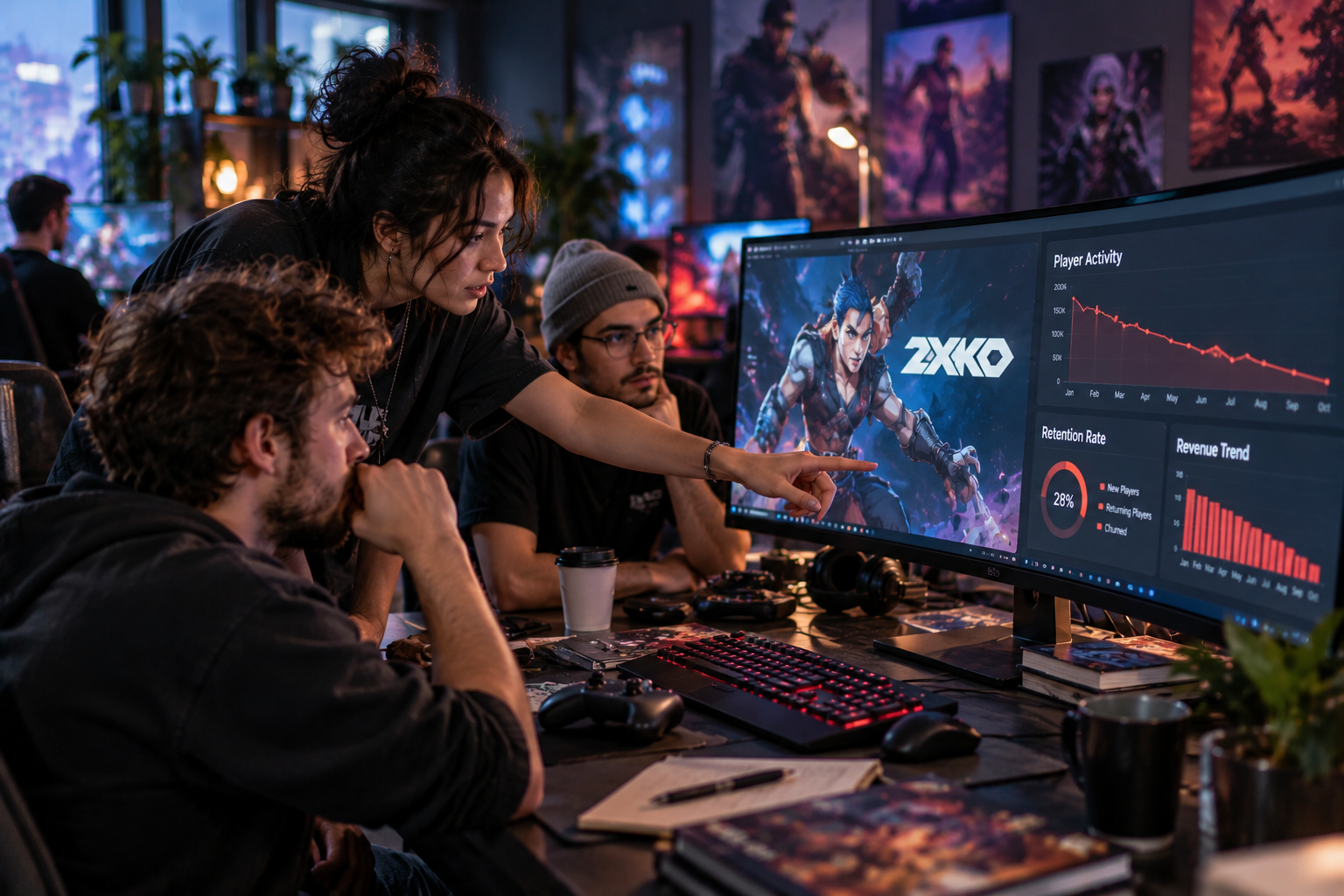
Riot Games offered one of the clearest examples in August, when it announced that active development of 2XKO, its competitive fighting game set in the League of Legends universe, would end at the close of 2026. The game will remain available and its servers will continue to operate, but Riot will stop producing new content after the planned 2026 updates. The company explained that although the game had attracted many players and developed a dedicated community, long-term engagement had not reached a level that made continued active development sustainable.
The decision is particularly revealing because Riot is hardly an outsider to the live-service business. League of Legends, Valorant and Teamfight Tactics have demonstrated the company’s ability to build and maintain large online communities. If even a publisher with that experience has to reconsider the economics of a new service, the wider industry has a good reason to examine the assumptions behind the model.
The Hardest Part of a Live-Service Game Begins After Launch
A conventional game has a relatively clear production structure. Developers spend years creating the core experience, release it to players and then decide how much additional content or support makes sense. Even large games with expansions and updates generally have a point at which the main development cycle comes to an end.
A live-service game operates under completely different conditions.
The launch is only the beginning of the production process. Once the game is available, developers are expected to maintain servers, fix technical problems, balance gameplay, monitor the community and produce new reasons for players to return. Characters, maps, seasonal events, competitive systems and cosmetic content can all become part of a continuing schedule that has no obvious final chapter.
That creates a much higher requirement for sustained engagement.
A large launch audience is useful, but it does not necessarily tell a publisher whether the game can survive for several years. What matters is how many players remain active after the initial curiosity fades and whether the cost of retaining them can be justified by the revenue they generate.
Riot’s explanation of the 2XKO decision illustrates precisely that distinction. The company said it had examined revenue, retention, new-player numbers and engagement during 2026 and concluded that even significant content releases had not produced a lasting improvement in the game’s overall trajectory.
The challenge, therefore, was not simply attracting players. It was turning initial interest into a durable habit.
A Famous Franchise Can Open the Door, But It Cannot Keep Players Inside
One of the reasons 2XKO is such an interesting case is the strength of the intellectual property behind it.
The game was connected to the League of Legends universe, one of the best-known properties in modern gaming. That gave Riot an enormous advantage when it came to awareness. Existing fans already recognised the characters and the broader universe, while fighting-game players had a reason to pay attention to a new title from one of the industry’s most experienced developers.
But recognition and retention are different things.
A familiar franchise can persuade a player to download a game, watch a trailer or try several matches. It cannot automatically persuade that person to make the game part of their weekly routine. The player may enjoy the experience and still return to the titles that already occupy most of their gaming time.
That problem is becoming increasingly important because players already have a huge number of established online games competing for their attention.
The modern gaming market is not short of multiplayer experiences. It is crowded with them.
Players Have Limited Room for Permanent Games
The live-service model assumes that a game can become a long-term habit, but the number of such habits a player can maintain is limited.
Someone may regularly play a competitive shooter, return to a role-playing game with seasonal content and maintain a social multiplayer game with friends. Adding another title to that routine requires more than simply offering good gameplay. The new game has to provide something sufficiently distinctive to justify the time required to learn it, follow its updates and remain involved with its community.
This is particularly difficult for competitive games because commitment often increases as the player becomes more experienced.
A fighting game, for example, can be enjoyable after a few matches, but mastering characters, understanding matchups and following competitive developments requires a much deeper investment. The player is not only choosing whether to buy or download the game. They are deciding whether to develop a new skill set and make room for another competitive routine.
That makes the battle for retention much more demanding than the battle for initial visibility.
A new game can be widely discussed without becoming widely played for years.
More Content Does Not Always Solve the Problem
The conventional response to declining engagement is often to produce more content. A new character can attract returning players, a new map can create another burst of activity, and a seasonal event can bring former users back to the game.
These updates are important, but they cannot guarantee long-term retention if the underlying experience does not create a sufficiently strong reason to return.
Riot’s experience with 2XKO demonstrates the difficulty. The company pointed to positive player reactions to content such as Akali, Senna, Thresh and the game’s PvE offering, as well as competitive events, but concluded that these additions did not fundamentally change the game’s trajectory.
This distinction matters because content production is itself expensive.
If a publisher increases the amount of content being produced without generating a corresponding increase in long-term engagement, the economics can move in the wrong direction. The game becomes more expensive to maintain while the audience remains approximately the same.
For a live-service title, that is one of the most difficult situations a publisher can face.
The Cost of Keeping a Game Alive Is Permanent
The financial structure of live-service development makes the problem even more complicated.
A successful service requires a continuing organisation behind it. Programmers need to maintain the technology, artists need to create new assets, designers need to develop gameplay changes, quality-assurance teams need to test updates, and community and publishing teams need to communicate with players.
The scale of that operation can change, but the underlying obligation remains as long as the game is actively supported.
Riot said that 2XKO was costing substantially more to operate than it was generating and that player engagement had remained relatively flat despite major updates. The company considered alternatives such as reducing the team, slowing the update schedule and changing the business model before deciding that ending active development was the most responsible approach.
That explanation highlights an important point about the current gaming economy: a game can have passionate fans and still be commercially unsustainable.
The existence of a community is not enough by itself. The community has to be large and active enough to support the cost of keeping the development machine running.
The Industry Is Rethinking the Size of Its Bets
The wider development environment is also encouraging studios to reconsider how much they invest before they know whether a project has found its audience.
Unity’s 2026 Game Development Report found that 52% of surveyed developers were focusing on smaller projects in response to market conditions, while 20% reported shorter development cycles. The report also showed continuing interest in post-launch content and live operations, suggesting that developers are not abandoning ongoing support but are becoming more selective about the scale and structure of their projects.
That distinction is important.
The lesson from the current market is not necessarily that developers should stop supporting games after release. It is that they may be less willing to assume from the beginning that every ambitious project needs to become a permanent online platform.
A smaller or more focused game can reach a playable state sooner, allowing developers to learn from actual players before committing to years of expansion. If the audience grows naturally, the studio can increase its investment. If the response is weaker than expected, the financial consequences may be more manageable.
This approach changes the risk profile of development.
Instead of spending years building an enormous service around an audience that may or may not appear, a team can create a strong core experience and allow the market to determine whether a larger operation is justified.
The Market Is Making Room for Games With a Clearer Ending
The renewed interest in more focused projects also helps explain why traditional premium games remain important.
Single-player adventures, role-playing games, remakes and shorter independent titles do not necessarily need to maintain the same level of production indefinitely. A studio can define the scope of the project, complete the main experience and eventually move its developers to another game.
That does not make these projects inexpensive. Modern single-player blockbusters can require enormous budgets and many years of development.
The difference is that their business model does not necessarily depend on maintaining a permanent content pipeline.
For developers, that can provide a clearer production horizon. For players, it can provide a different kind of relationship with a game: an experience can be completed rather than becoming another permanent commitment competing for their attention.
This does not mean players are turning away from online games. It means the market is beginning to recognise that different games can serve different purposes.
The Best Live Services May Become More Selective
The future of live-service gaming is therefore unlikely to be a simple collapse of the model.
There will continue to be games that are exceptionally well suited to long-term operation. Competitive titles can benefit from regular balance changes and seasonal structures. Online worlds can become richer as communities grow. Games with strong social systems can develop relationships between players that keep them returning for years.
The difference is that publishers may become more selective about which projects receive that level of investment.
The existence of successful services such as League of Legends or Valorant does not mean every major franchise can support a comparable ecosystem. Those games have built distinctive communities and developed habits that are difficult to reproduce simply by allocating a large budget to a new project.
The industry is gradually learning that live service is not a feature that can be added to a game after the fact. It is a business and design model that depends on the right audience, the right gameplay structure and a sustainable relationship between content costs and player engagement.
A Game Does Not Have to Last Forever to Be Successful
There is also a broader cultural shift taking place among players.
The modern games market offers an extraordinary number of experiences, and players increasingly have to decide how much time they can realistically give to each one. A game that requires constant attention is competing not only with other new releases but also with the player’s existing library.
That makes the promise of endless content less automatically attractive than it once seemed.
A player may appreciate a game that receives new material every month, but they may also value a title that can be completed in several weeks and then set aside without creating a sense of unfinished obligation.
The industry therefore has an opportunity to rethink the idea that longevity is always the highest measure of value.
A game can be commercially successful because players love it for thirty hours. Another can succeed because its community returns for ten years. These are different forms of success, and forcing every project into the second category may not be economically or creatively sensible.
What Happens to 2XKO Next?
Riot has not announced the immediate disappearance of 2XKO. Instead, the company plans to complete its 2026 content roadmap, including the introduction of Lux and Samira, before ending active development. The servers are expected to remain online, allowing existing players to continue using the game after new content production stops.
That creates an interesting middle ground between active development and complete closure.
The game can remain available to its existing community without requiring Riot to maintain the same level of production indefinitely. Players who have invested time in the game do not immediately lose access, while the company can redirect resources toward projects with stronger long-term prospects.
This model could become more relevant as publishers reassess their portfolios.
Not every game needs to remain in an aggressive growth phase forever. Some may eventually settle into a stable state where the existing content remains available even though major new additions stop.
Such a transition is very different from simply shutting down a game, and it gives publishers another way to manage the later stages of a project’s life.
The Live-Service Era Is Entering a More Mature Phase
The industry’s current reassessment should not be interpreted as the end of live-service gaming. Instead, it looks more like a maturation of the model.
During the strongest years of the live-service boom, the prospect of recurring revenue made permanent online games seem almost universally attractive. The experience of the past few years has demonstrated that the model works exceptionally well for some games and poorly for others, while the cost of discovering the difference can be enormous.
Riot’s decision on 2XKO is particularly instructive because the company had the expertise, the technology and the strength of a major intellectual property behind the project. Even those advantages could not guarantee the level of sustained engagement required to justify indefinite active development.
That may encourage publishers to become more disciplined about their future investments.
Instead of asking whether a franchise can be turned into a service, they may increasingly ask whether players have a genuine reason to return to that particular game week after week.
The distinction is subtle, but it could have a major effect on the games that reach the market over the next several years.
The New Question Is Whether Players Want More
The live-service model was built around an appealing promise: create a successful game once, then continue expanding it for as long as the audience remains engaged.
The reality is considerably more complicated. Maintaining a permanent game requires a permanent investment, and that investment only makes sense when the audience is large enough, active enough and committed enough to support it.
The industry’s next phase is therefore unlikely to be defined by abandoning live service altogether. Instead, developers and publishers may become more careful about deciding which games deserve years of additional content and which are better served by a focused development cycle with a clearly defined endpoint.
That could ultimately benefit players.
A healthier market does not need every game to become an endless platform. It needs different games to succeed for different reasons: some because they create communities that last for years, others because they deliver a memorable experience and then make room for whatever comes next.
The most important lesson from the current live-service correction may be that longevity is not something a publisher can simply design into a game.
It has to be earned by giving players a reason to come back.